
L
o
a
d
i
n
g

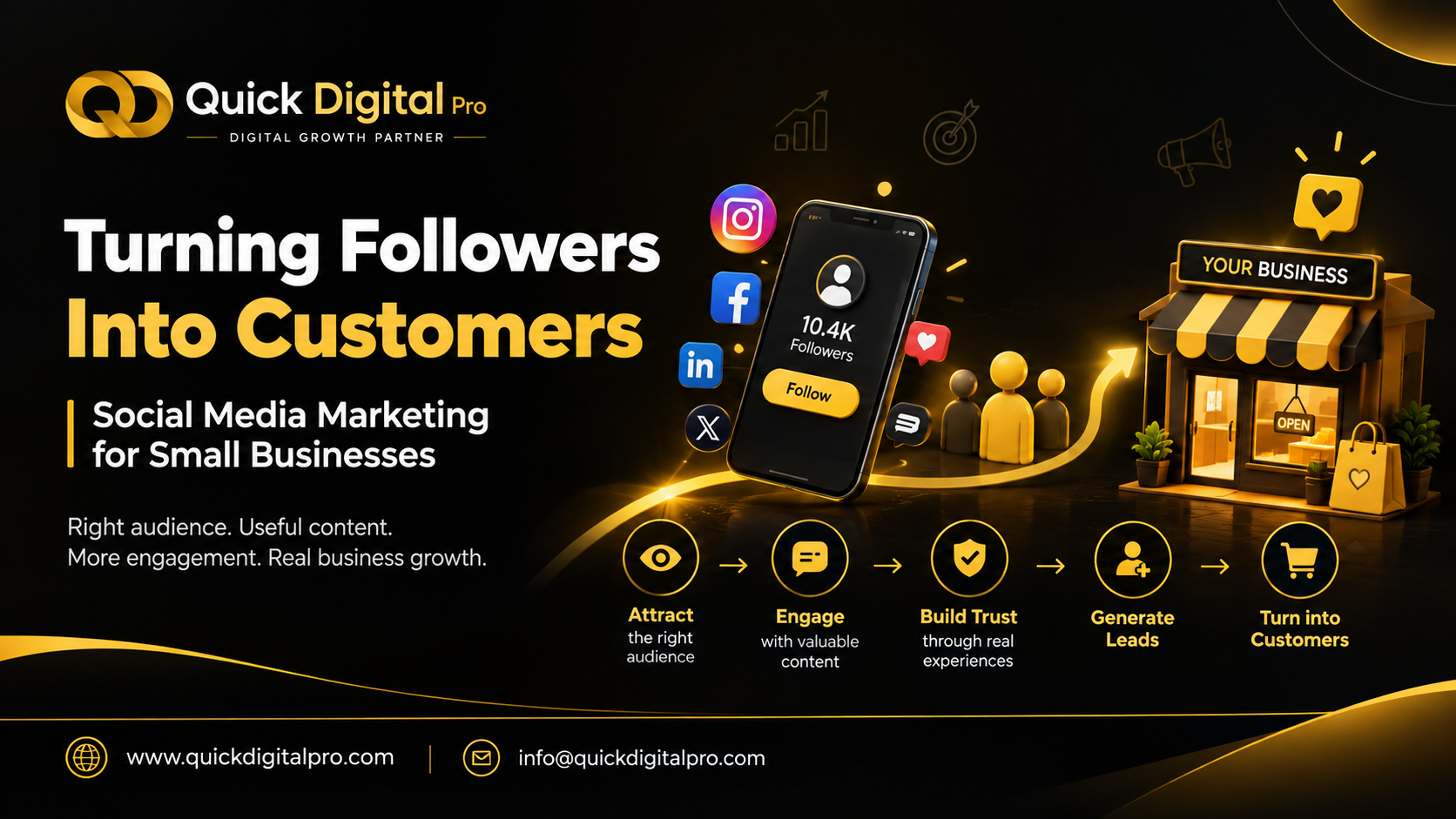
Turning Followers Into Customers : Social Media Marketing for Small Businesses
25
Aug
Turning Followers Into Customers : Social Media Marketing for Small Businesses
How Can Small Businesses Turn Social Media Followers Into Customers?
You post consistently. People like your posts. Your follower count slowly grows.
But then you check your enquiries and sales — and nothing seems to have changed.
So what’s missing?
For a small business, social media isn’t successful simply because people follow you. The real value comes when those followers start trusting your brand, visiting your website, sending enquiries and eventually becoming customers.
Small businesses can turn social media followers into customers by attracting the right audience, creating useful content, building trust and giving interested people a clear next step.
That’s the difference between simply having a social media presence and using social media marketing for small businesses as a genuine growth channel.
What Does Social Media Marketing Mean for a Small Business?
For a small business, social media marketing is much more than posting photos or announcing offers. It’s about getting your business in front of the right people, giving them a reason to follow you and gradually building enough trust for them to choose you. A strong online presence can help connect these social media efforts with other digital marketing channels. .
A local bakery might use Instagram to showcase fresh products and attract people nearby. A clothing store could use Reels to demonstrate different ways to style its products. A professional service company might use LinkedIn to answer common customer questions and demonstrate its expertise.
The strategy changes depending on the business, but the basic idea stays the same: social media should have a purpose.
Instead of asking only, “How often should we post?”, a small business should first ask, “What do we want social media to achieve?”
That could mean increasing brand awareness, generating enquiries, driving website traffic, promoting a product or building relationships with existing customers.
Once that goal is clear, choosing platforms and planning content becomes much easier.
Why Followers Alone Don’t Guarantee Business Growth
A large follower count can look impressive, but it doesn’t necessarily tell you how much value social media is creating.
Imagine two businesses.
One has 20,000 followers but receives very few enquiries. Another has 2,000 followers but regularly receives messages, website visits and customers through social media.
Which one is doing better?
For the business owner, the second account may be far more valuable.
This doesn’t mean followers are unimportant. A relevant and engaged audience can create more opportunities. The problem starts when follower growth becomes the final goal rather than one part of the customer journey.
Think about a person discovering a local bakery through Instagram. They see a Reel showing freshly baked brownies, follow the account and continue seeing its posts. A few days later, they notice a customer review. Later, they see a weekend menu.
They don’t necessarily buy anything the first time they see the business.
But when they need a cake for a birthday, that bakery is already familiar to them.
That’s how social media can work. A customer may discover a business through one post, become familiar with it through several interactions and eventually decide to buy when the need arises.
The goal isn’t to turn every follower into a buyer. It’s to attract the right people and give interested people enough reasons to move forward.
Choosing the Right Social Media Platforms
Small businesses don’t need to be active on every social media platform. The better approach is to focus on the platforms where their potential customers are most likely to spend time.
Trying to manage Instagram, Facebook, YouTube, LinkedIn and every new platform at the same time can quickly become overwhelming for a small team.
Instead, think about your customers first.
| Platform | Often useful for |
| Visual products, fashion, food, beauty and lifestyle brands | |
| Local businesses, communities and customer communication | |
| YouTube | Tutorials, demonstrations and educational content |
| B2B companies and professional services | |
| WhatsApp Business | Customer enquiries, follow-ups and direct communication |
These aren’t strict rules. A clothing brand could benefit from YouTube, while a professional service company might find Instagram useful too.
The important thing is to choose platforms based on where your audience is and what type of content you can consistently create.
For a small business, being genuinely useful on two relevant platforms can be much better than being barely active on six.
Creating Content That Attracts the Right Audience
If every post tells people to buy something, there isn’t much reason for them to keep following.
People follow businesses because they find something useful, interesting, entertaining, inspiring or trustworthy.
Imagine a digital marketing company that posts:
“We provide SEO services. Contact us today.”
There’s nothing wrong with that post, but it doesn’t give someone much reason to stop scrolling.
Now imagine the same company posts:
“Your website is getting visitors but no enquiries. Here are three reasons why.”
That’s different.
It starts with a problem that a potential customer may actually be experiencing. The business gets an opportunity to demonstrate its knowledge while providing something useful.
A strong social media content strategy can include educational posts, problem-solving content, demonstrations, customer experiences and promotional posts.
The objective isn’t to stop selling. It’s to avoid making every interaction feel like a sales pitch.
Over time, useful content creates familiarity. When someone eventually needs the product or service, the business isn’t a stranger appearing in their feed for the first time.
Turning Engagement Into Leads
A person liking or sharing a post is a positive signal, but what happens next?
If someone becomes interested but has no clear way to learn more, contact the business or make a purchase, that interest can disappear.
This is where a clear call to action becomes important.
An educational post might direct readers to a detailed blog. A service post could invite someone to send an enquiry. A product post might direct people to an online store.
For example, a small interior design business could post a Reel showing a living-room makeover.
At the end, instead of simply saying “Follow for more,” it could say:
“Planning to redesign your space? Send us a message to discuss your requirements.”
Now the viewer has a clear next step.
A follower who is interested in the service knows exactly what to do instead of simply scrolling past the post.
This is the foundation of effective social media lead generation. The social platform creates the opportunity, while the business profile, website, messaging and call to action help turn that opportunity into action.
Building Trust Before Asking for the Sale
People rarely choose a business based on one social media post.
Before buying, they may look at reviews, compare alternatives, visit the website or simply spend time observing the business.
Social media gives small businesses an opportunity to build that trust before asking for the sale.
A bakery can show how its products are made.
A clothing brand can share real customer photos.
A digital marketing company can explain how it solved a particular problem.
A salon can show transformations and customer experiences.
These examples provide something that simply saying “We are the best” cannot: evidence.
Behind-the-scenes content, testimonials, case studies, demonstrations and useful explanations can make a business feel more genuine.
Trust doesn’t usually happen in one post. It develops through repeated interactions.
That’s why consistency matters. When people repeatedly see a business providing useful information and showing real experiences, they become more familiar with the brand and more comfortable considering it when they need its products or services.
Building a Social Media Strategy That Works
A practical social media strategy doesn’t have to be complicated.
Start with the customer. Who are you trying to reach? What problem do they have? What does your business offer that can help them?
Then choose the platforms that make sense for that audience.
Next, decide on a few content themes. These might include education, problem-solving, customer stories, demonstrations and promotions. Having a few clear themes makes it easier to create content without wondering what to post every day.
Your posting schedule should also be realistic.
If a small business cannot create high-quality content every day, there is no need to promise daily posts. A consistent schedule that the business can actually maintain is much more useful than posting frequently without a clear strategy.
Most importantly, pay attention to what happens after people interact with your content.
Look beyond follower growth and likes. Profile visits, website clicks, enquiries, bookings and purchases can give a clearer picture of whether social media is contributing to business growth.
The goal is not to post more simply for the sake of posting. It is to understand what helps move the right people closer to becoming customers.
Connecting Social Media With SEO and Other Digital Marketing
Social media doesn’t have to work alone.
A customer might discover a business through Instagram, search for its name on Google, read a blog and then visit the website before making an enquiry.
That means social media can work alongside SEO, content marketing, paid advertising and the digital marketing strategies used across your website.
For example, a social media post could introduce a common customer problem. A blog could explain that problem in more detail, while the website provides the relevant product or service.
A person may encounter the same business several times across different digital channels before deciding to contact it.
The goal isn’t to use every digital marketing channel separately.
It’s to make those channels work together.
From Followers to Customers: The Complete Journey
Think about a customer discovering a small clothing brand through Instagram.
They see a Reel.
They like the style and follow the account.
A week later, they see a customer review.
Then they see a styling video featuring a product they like.
They visit the profile, check the website and eventually place an order.
The purchase didn’t happen because of one post.
It happened because several small interactions built familiarity and trust.
That’s what turning followers into customers really looks like.
A follower is not automatically a customer. But a follower who repeatedly sees useful content, understands what a business offers, trusts the brand and knows how to take the next step can gradually become one.
The process may take days, weeks or even months depending on the product, service and customer.
For a small business, the real opportunity isn’t simply gaining more followers. It’s building meaningful relationships and creating a clear path from attention to action.
Frequently Asked Questions
1.How does social media marketing help small businesses?
Social media marketing can help small businesses increase visibility, reach potential customers, build trust, generate enquiries and guide people towards their website, store or other conversion points.
2.How can a small business get customers from social media?
A small business can attract customers by creating useful content for a relevant audience, building trust and providing clear ways for interested people to enquire, visit the website, book or purchase.
3.Which social media platform is best for a small business?
There is no single platform that is best for every business. The right choice depends on the target audience, business type, content format and marketing objective.
4.How often should a small business post on social media?
There is no universal posting frequency that guarantees success. A realistic and consistent schedule is more valuable than posting frequently without a clear strategy.
5.Are followers more important than engagement?
Not necessarily. Followers show audience size, while engagement shows how people interact with content. For business growth, enquiries, conversions and revenue can be more meaningful measures.
Conclusion
Social media marketing isn’t about becoming the most popular account on the internet.
For a small business, it is about becoming visible to the right people, earning their trust and making it easy for them to take the next step.
A person may discover your business through a Reel, follow your account because they find your content useful, become familiar with your brand through repeated interactions and eventually contact you when they need what you offer.
That process takes more than one post. It takes relevant content, consistency, trust and a clear path from interest to action.
So the next time you look at your social media account, don’t ask only:
“How many followers did we gain?”
Ask:
“What happened after they followed us?”
Because ultimately, the value of social media isn’t just measured by how many people see your brand. It’s measured by how effectively that attention helps your business grow.
Ready to Turn Your Social Media Into a Growth Channel?
A strong social media presence takes more than regular posting. It requires the right audience, useful content and a strategy that connects engagement with real business goals.
Quick Digital Pro helps businesses strengthen their online presence through practical digital marketing strategies designed to reach the right audience and support business growth.
Ready to grow your business online? Explore Quick Digital Pro today.